Gallery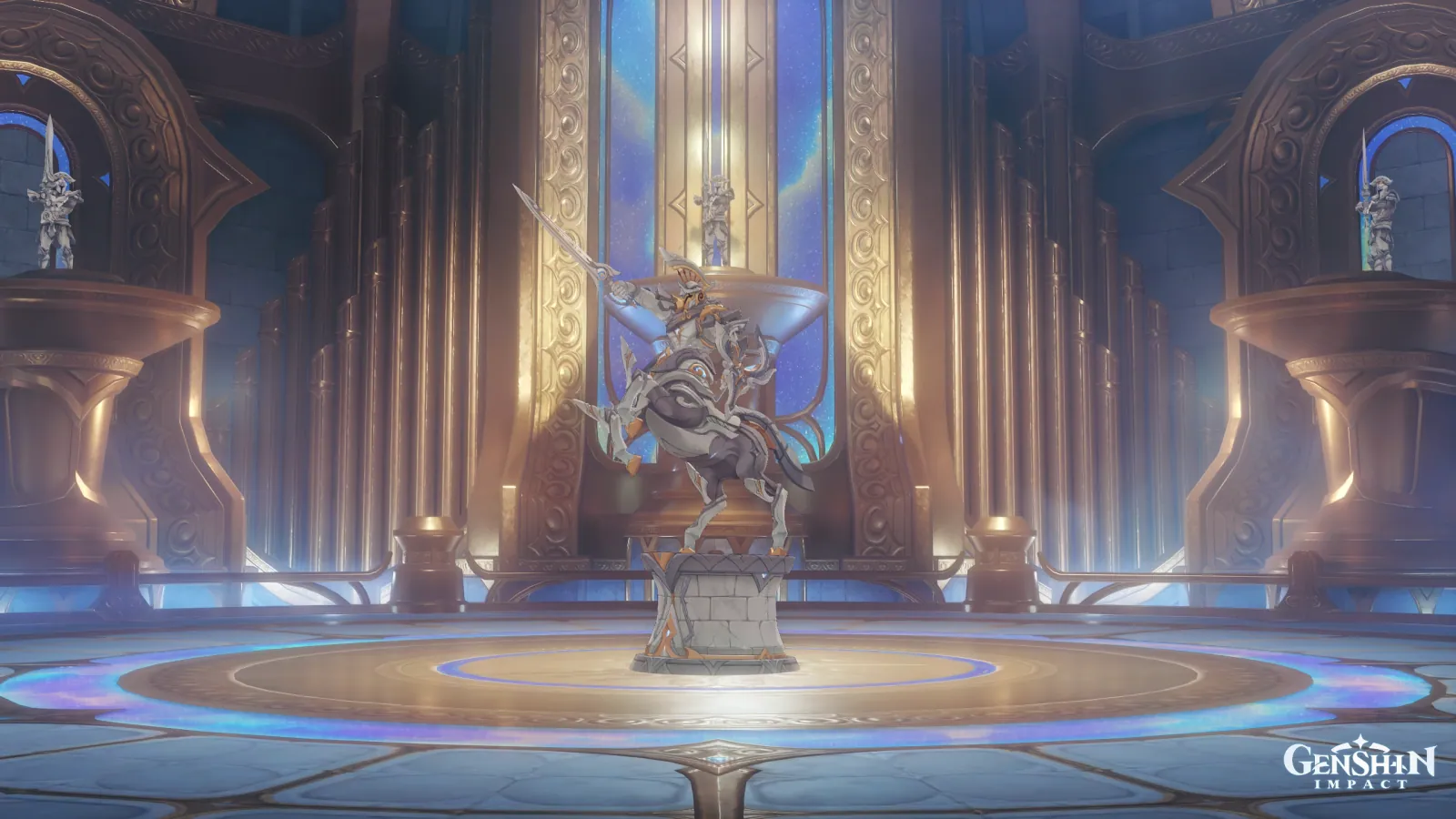
FontaineSolemnPlain RadianceVast
Domus Aurea, Gold Made of Light
Palette
Click a swatch to copy its HEX; hover for the OKLCH value.
Reconstructed gradient
The gradient distilled from the scene, unrolled left to right by stop; the authored angle is 180° (used by the hero and exports), while gallery cards share a uniform 135° sweep.
0%70595f15%6a7dcd32%b69c8345%d8c29062%7e707384%647690100%cecbbc
Why it works
Gold is arranged, not mixed. In this hall named for gold, the most chromatic 4000 pixels are 4000/4000 blue and violet, and not one of them is gold — the metal covers 235,968 pixels (26.80%) yet caps at chroma 0.085, below the frame's own chroma p99 of 0.113. More than one per cent of this picture is more saturated than its most golden gold pixel. Gold's identity is written instead on a lightness ramp built from three hue bands: red at 5.38% averaging L 0.49, orange at 8.42% averaging L 0.54, yellow at 13.00% averaging L 0.70 — while chroma only climbs from 0.031 to 0.047. To make a surface read as metal, spend the whole budget on how finely the light-and-dark layers are cut, and hand the chroma to the window beside it that light is passing through.
Take these colours with you
CSS variables, a Tailwind v4 theme or SVG — one click to copy into your project.
/* Domus Aurea, Gold Made of Light · Domus Aurea, Gold Made of Light — Teyvat Palette */
:root {
  --bronze-groove: oklch(0.49 0.031 2); /* Bronze Groove #70595f */
  --window-core: oklch(0.61 0.124 272); /* Window Core #6a7dcd */
  --column-gold: oklch(0.71 0.046 67); /* Column Gold #b69c83 */
  --ridge-gold: oklch(0.82 0.07 86); /* Ridge Gold #d8c290 */
  --stone-rider: oklch(0.56 0.018 7); /* Stone Rider #7e7073 */
  --floor-inlay: oklch(0.56 0.047 258); /* Floor Inlay #647690 */
  --light-pool: oklch(0.84 0.02 96); /* Light Pool #cecbbc */
  --gradient-domus-aurea: linear-gradient(180deg, oklch(0.49 0.031 2) 0%, oklch(0.61 0.124 272) 15%, oklch(0.71 0.046 67) 32%, oklch(0.82 0.07 86) 45%, oklch(0.56 0.018 7) 62%, oklch(0.56 0.047 258) 84%, oklch(0.84 0.02 96) 100%);
}A 1080×1350 PNG carrying the scene, its palette and every value — save it and post it as is.